harare24dmin
 By Nkululeko Nkomo
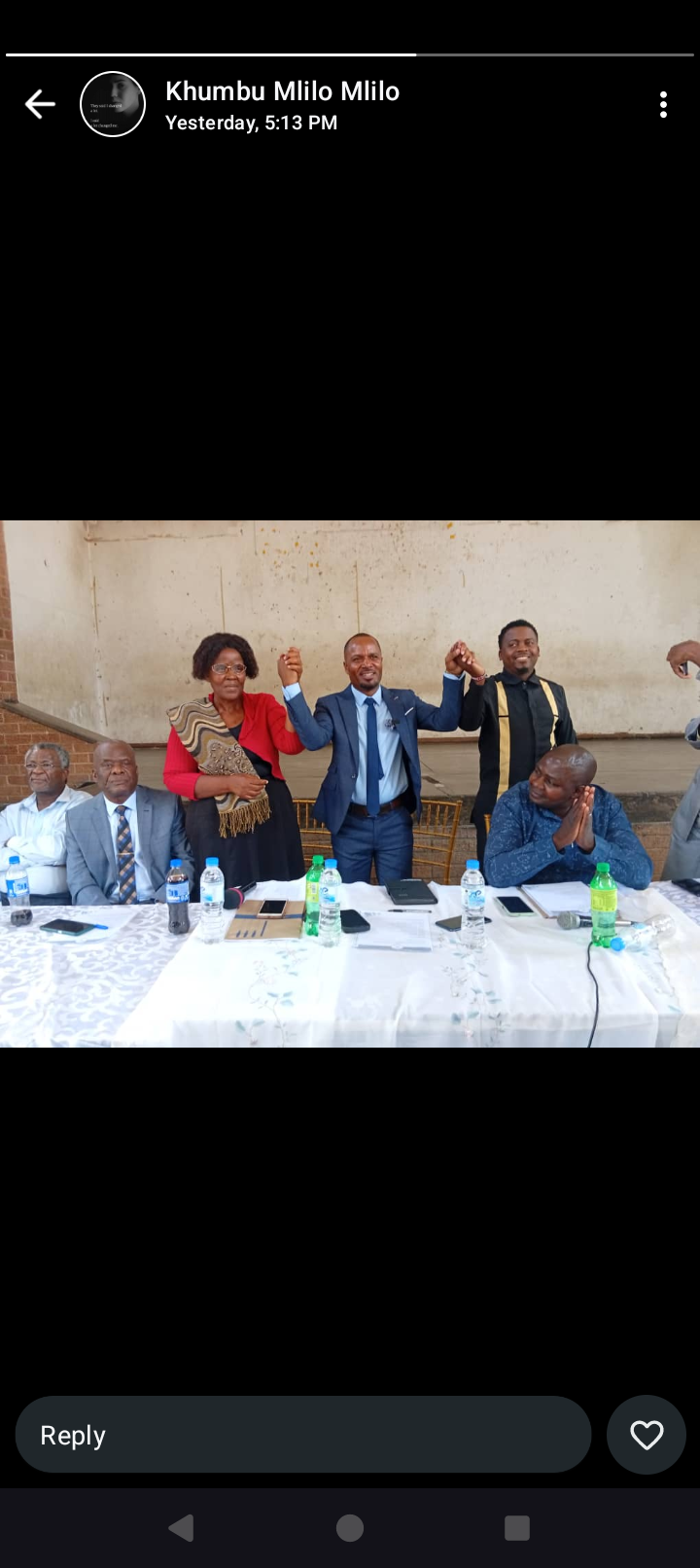
NKULUMANE— The newly elected Nkulumane Constituency Member of Parliament Hon. Freedom Murechu, Ward 22 Councillor Mmeli Moyo, and Ward 23 Councillor Ntombizodwa Khumalo publicly declared a unity pact committing themselves to joint development work for the constituency.
The declaration was made during the Nkulumane Constituency Stakeholders Indaba held at Nkulmane Hall on February 28, 2026, before a broad cross-section of community leadership that included square leaders, churches, the NCDC, CDF structures, police, clinic representatives, war veterans, and organisations representing persons with disabilities.
The show of unity stood out because it cuts across entrenched party lines. Murechu represents the ruling ZANU PF while both councillors are from the opposition CCC —a political mix that had led some analysts to predict friction rather than cooperation.
Standing side by side and clasping hands before the gathering, the three leaders dismissed those fears.
Hon. Freedom Murechu said the pact marked a clear shift in how public office would be exercised in Nkulumane. “From today, our work will be guided by a simple philosophy—Community Led Development. Development must come from the people, with leaders working together, not pulling in different directions. Nkulumane is bigger than any party.”
Ward 22 Councillor Mmeli Moyo echoed the sentiment, urging residents to judge leaders by delivery rather than party colours.
“We were elected by the same community. Roads, clinics and schools don’t ask for party cards. I want residents to treat every elected leader the same and hold us all accountable for development,” Moyo said.
Ward 23 Councillor Ntombizodwa Khumalo described the unity as a practical necessity rather than a symbolic gesture.
“Our people expect solutions, not political fights. When we work together, women, youths and the vulnerable benefit first. Let us remove party lenses and put Nkulumane first,” Khumalo told the indaba.
Political analysts welcomed the development, saying it could reset local governance norms in Bulawayo’s high-density suburbs. Political commentator Tinashe Moyo said the pact sent a strong message to both politicians and voters.
“This is mature politics. It shows that cooperation at local level can unlock stalled development and reduce unnecessary tensions,” he said.
Another analyst, Nomsa Dube, noted that the emphasis on community-led development could deepen citizen participation.
“If they sustain this unity beyond the photo-op, Nkulumane could become a model of cross-party governance where communities drive priorities and leaders facilitate,” Dube observed.
As the indaba concluded, the mood in the hall was one of cautious optimism. For many stakeholders present, the real test will be whether the unity declared translates into coordinated action on the ground—but for one afternoon in Nkulumane, politics took a back seat to a shared promise of development.